REAL ESTATE NEWS

May 15, 2026

Why Invest in Guam?


Invest in Guam

Invest in Guam —
Why Guam?

America's westernmost territory offers international investors something found nowhere else in the Pacific: U.S. legal protections, a dollar-denominated economy, and an irreplaceable location at Asia's doorstep.

AG
Anthony Godwin
Principal Broker · Today's Realty, LG&G Corporation · LeadingRE Member

There are very few places in the world where an international investor can hold fee-simple title under U.S. law, transact in U.S. dollars, rely on U.S. and local Guam courts for dispute resolution — and still be a four-hour flight from the most dynamic economies in Asia. Guam is one of them. In fact, it may be the only one.

As the westernmost U.S. territory in the Pacific, Guam occupies a strategic position that has made it economically significant for generations. Today, a convergence of forces — a historic military buildup, a major infrastructure investment wave, and a recovering tourism sector — is creating conditions that long-term investors recognize as a rare early-mover opportunity.

$9B+
DoD investment on Guam, 2024–2028
44,000
Projected military population by 2037
1M+
Projected annual visitor arrivals, 2026
25
Designated federal Opportunity Zones

"America in Asia" — The Geographic Advantage

Guam is located in the North Pacific Ocean, approximately 1,550 miles southeast of Japan and 1,500 miles east of the Philippines. The Guam Economic Development Authority (GEDA) describes the island simply as "America in Asia" — a framing that captures something no other jurisdiction in the region can offer.

For investors based in Japan, Korea, the Philippines, or Taiwan, Guam removes the friction of crossing the Pacific. Business can be conducted in Asian time zones, travel is direct and fast, and the legal and financial environment is fully American.

Flight Time to Guam from Major Asian Cities
GUAM
U.S. Territory
Western Pacific
Tokyo
Japan
3h 45m
~1,550 mi
Seoul
South Korea
4h 40m
~1,850 mi
Manila
Philippines
4h
~1,500 mi
Taipei
Taiwan
4h
~1,700 mi
Hong Kong
China SAR
4h 30m
~2,100 mi

Source: Guam Economic Development Authority · investguam.com

The Full Weight of U.S. Law and Finance

What distinguishes Guam from every other Pacific investment market is the completeness of its U.S. legal and financial infrastructure. This is not a jurisdiction that resembles the United States — it is the United States, as it has been since 1898.

Like U.S. states, Guam has a two-tier court structure. A local court system — the Superior Court of Guam and the Supreme Court of Guam on appeal — handles territorial matters, while the District Court of Guam, a federal Article III court, handles federal matters. Together, they give investors access to the same layered legal protections available anywhere in the United States: enforceable contracts, clear property rights, and both territorial and federal judiciary oversight.

Transactions are conducted entirely in U.S. dollars, eliminating currency exchange risk. U.S. federally chartered banks operate on the island with the same wire infrastructure as the mainland. And unlike many U.S. states that have enacted restrictions on foreign real property ownership, Guam imposes no blanket prohibitions on international investors holding title directly — making it one of the most accessible U.S. jurisdictions for foreign capital.

For investors interested in a path to residency, Guam also participates in the EB-5 Immigrant Investor Program under the EB-5 Reform and Integrity Act of 2022. Qualifying investments in a new commercial enterprise on Guam may be eligible for U.S. Permanent Resident Status (Green Card), with up to 10,000 visas available annually. GEDA assists investors in structuring eligible investments.

"Guam is the only place where an Asian investor can hold U.S. title, transact in U.S. dollars, and have access to both local Guam courts and a U.S. federal courthouse — and still be home in Tokyo in under four hours."

Anthony Godwin · Principal Broker, Today's Realty

A Historic Military Buildup Reshaping the Market

No single force is reshaping Guam's real estate landscape more profoundly than the ongoing U.S. military buildup. The Department of Defense is spending approximately $9 billion on military projects on Guam between 2024 and 2028 — a level of investment unprecedented in the island's modern history.

At the center of this transformation is Marine Corps Base Camp Blaz — the first new Marine Corps base established in nearly 70 years, built on a 562-acre site in Dededo. Under a bilateral agreement between the United States and Japan, approximately 5,000 Marines and 1,300 family members are relocating from Okinawa, with Japan contributing approximately $3 billion toward Camp Blaz's construction. The first Marines arrived in late 2024, with the full relocation expected by 2028.

By 2037, the total military-affiliated population on Guam is projected to grow by 15,500, reaching an estimated community of 44,000 active duty personnel, DoD civilians, reservists, and dependents. The DoD is also deploying advanced missile defense systems across 16 locations on the island, with approximately $10 billion earmarked through 2035.

For real estate investors, this translates into a sustained, federally backed demand surge across housing, commercial services, and hospitality — anchored by tenants whose rent is supported by the U.S. military's Overseas Housing Allowance (OHA), the allowance applicable to service members stationed on Guam.

A Resilient Economy Built on Two Pillars

Guam's economy rests on two durable foundations: U.S. federal spending and tourism. According to the U.S. Bureau of Economic Analysis, federal spending accounted for over 40% of Guam's GDP in 2022, providing a degree of economic stability that few island economies can match.

Tourism, while representing approximately 6% of GDP in 2024, has historically been a significant driver. Guam welcomed over one million annual visitors for decades before the pandemic, with the majority arriving from Japan and South Korea. That deep cultural affinity — and the established direct airlift from multiple Japanese cities — creates a tourism relationship that is difficult to replicate elsewhere in the Pacific. Visitor arrivals are projected to recover to over one million in 2026.

GEDA is actively pursuing economic diversification, attracting Asian companies seeking to expand into the United States and using infrastructure investment and incentive programs to broaden the island's economic base. As GEDA describes it, "Guam is on the cusp of one of our most prolific eras of economic expansion."

Government-Backed Investment Incentives

The Government of Guam, through GEDA, administers a suite of investment incentives — several unique to Guam's status as a U.S. territory. Full program details are available at investguam.com.

25 Qualified Opportunity Zones
Designated in 2018 and certified by the U.S. Treasury. Qualifying investments may be eligible for federal capital gains deferral, reduction, and potential exclusion for long-term holders.
Learn more at investguam.com
Qualifying Certificate (QC) Program
GEDA's flagship tax incentive program, tailored to eligible investment commitments, job creation, and activities deemed beneficial to Guam's economy. GEDA acts as the direct investor concierge.
Learn more at investguam.com
EB-5 Immigrant Investor Program
A pathway to U.S. Permanent Resident Status for qualifying investors. Up to 10,000 visas available annually under the EB-5 Reform and Integrity Act of 2022.
Learn more at investguam.com
Territorial Tax Structure
Guam mirrors the U.S. federal income tax code but retains taxes on-island, funding local infrastructure and services while keeping the framework familiar to U.S. and international investors alike.
Learn more at investguam.com

Where to Invest — Property Categories

Guam offers meaningful entry points across all major real estate categories. Each carries distinct demand drivers, return profiles, and risk characteristics. Today's Realty works with investor clients across all four.

01 · Residential
Condominiums & Residential

The strongest near-term demand story, driven by military relocation and a growing island workforce.

  • Military OHA-backed rental income
  • Oceanfront and resort-adjacent condominiums
  • Short-term rental demand from 1M+ projected annual visitors (2026)
  • New development pipeline aligned with buildup
02 · Commercial
Commercial & Retail

A captive consumer base plus millions of tourists supports Guam's commercial corridor.

  • Tumon Bay — luxury retail and hospitality hub
  • Duty-free and Japanese-brand retail presence
  • Office demand from federal contractors and defense agencies
  • Mixed-use development opportunities
03 · Hospitality
Hotels & Resort Assets

Japan and Korea's deep tourism relationship with Guam supports a resilient hospitality sector.

  • Japanese and Korean resort operator presence
  • Beachfront resort properties in Tumon Bay
  • Repositioning and renovation opportunities
  • Branded flag and management acquisitions
04 · Land & Development
Land & Development Sites

At just 210 square miles total, available development land on Guam is genuinely constrained.

  • Agricultural, residential, and commercial parcels
  • Sites adjacent to military expansion corridors
  • Master-planned subdivision and resort development sites
  • GovGuam public land leasehold programs

The Time to Invest in Guam is Now

The convergence of historic military investment, infrastructure development, and a recovering tourism economy — all within a fully American legal and financial framework — creates the kind of moment that long-term investors look for. Guam's land supply is finite. The demand catalysts are real and federally funded. The legal protections are complete.

For investors based in Japan, Korea, the Philippines, Taiwan, or Hong Kong, Guam represents something genuinely rare: a U.S. dollar asset, protected by U.S. law, close enough to home to manage actively, and positioned squarely in the path of sustained federal spending for decades to come.

Today's Realty has deep roots in Guam's market. We have the local expertise, MLS access, and international network — through our LeadingRE membership — to guide investors from initial inquiry through closing and beyond. We'd welcome the opportunity to prepare a personalized briefing for you.

Official Resources — Invest Guam (GEDA)

The following resources are published by the Guam Economic Development Authority (GEDA), the official government agency responsible for investment promotion on Guam. We encourage all prospective investors to explore these primary sources directly at investguam.com.

Disclaimer & Information Currency Notice

The information in this article was compiled from publicly available sources, including the Guam Economic Development Authority (GEDA), the U.S. Department of Defense, the U.S. Bureau of Economic Analysis, and published news reporting, and reflects conditions as understood at the time of publication. Statistical figures, program details, and market conditions are subject to change. Readers are encouraged to verify current data directly with the cited sources, including investguam.com.

This content is published for general informational purposes only and does not constitute investment, legal, tax, or financial advice. Real estate investment involves risk. Prospective investors should conduct independent due diligence and consult with qualified legal, tax, and financial advisors before making any investment decision. Today's Realty (LG&G Corporation) is a licensed real estate brokerage on Guam (License No. RCB-241) and does not provide legal, tax, or financial advisory services.

AG
Anthony Godwin
Principal Broker · Today's Realty, LG&G Corporation

Anthony Godwin is the Principal Broker of Today's Realty, one of Guam's leading full-service real estate brokerages. He is an active member of the Guam Association of REALTORS® MLS and serves on the MLS Technology Committee. Through his LeadingRE membership, Anthony connects international investors with Guam's most current market intelligence and professional guidance.

RCB-241 · Guam Real Estate Commission GAR MLS Participant MLS Technology Committee LeadingRE Member

Posted in Investors
May 15, 2026

The Pricing Mistake THat Could Cost You Your Sale

The Pricing Mistake That Could Cost You Your Sale


Most sellers come into the market with one number in mind. And it’s often the one that costs them the most. That's their asking price

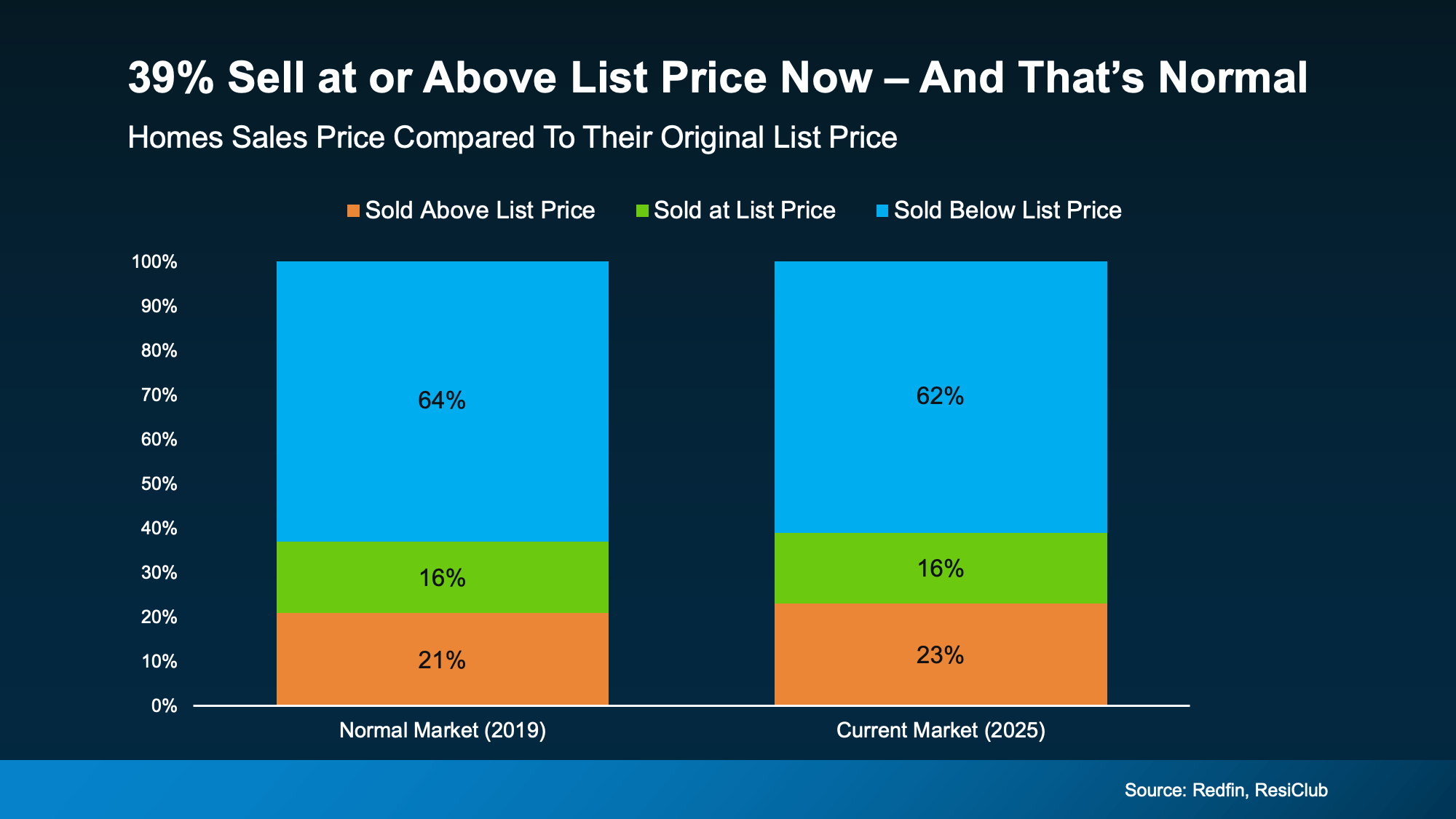
A survey from Realtor.com shows about 8 in 10 (80%) of sellers expect to sell at or above their asking price today. But here’s where things get interesting.

In reality, only about 4 out of every 10 (roughly 40%) actually do.

That’s a big gap. And it’s where a lot of sellers get caught off guard. So, why the disconnect? And how can you set yourself up to be one of the 4 in 10 that get top dollar? 

Let’s break it down.

What Should You Really Expect To Get for Your House? 

That 40% may sound low at first, but it’s not.

If you look back to the last typical year for the housing market (2019), what we're really seeing is a return to what’s normal (see chart below). If anything, slightly more homeowners are able to sell above list price today compared to 2019:

a graph of a marketIt only feels low because the past few years were anything but typical. Between 2020 and mid-2022, buyer demand was sky-high and the number of homes for sale was at record lows. Almost everything sold over asking. 

Now, the market has shifted.

There are more homes for sale. Buyers have more options. And that means they’re more selective about how they spend their money.

In other words, the rules have changed – and pricing like it’s still 2021 is where sellers run into trouble. You have to meet the market where it is if you really want to cash in big.

What Happens When a Home Is Priced Too High

Here’s the reality. It’s easy to think pricing high gives you room to negotiate. But it usually does the opposite.

When your home is priced above what buyers expect, in this market, they don’t negotiate. They move on.

Because buyers notice price first. And if your home doesn’t line up with similar options in your area, it may not even get a showing. And that’s when things start to snowball:

  • A high price gets less interest from buyers.

  • Less interest means fewer offers.

  • And fewer offers usually means more time on the market.

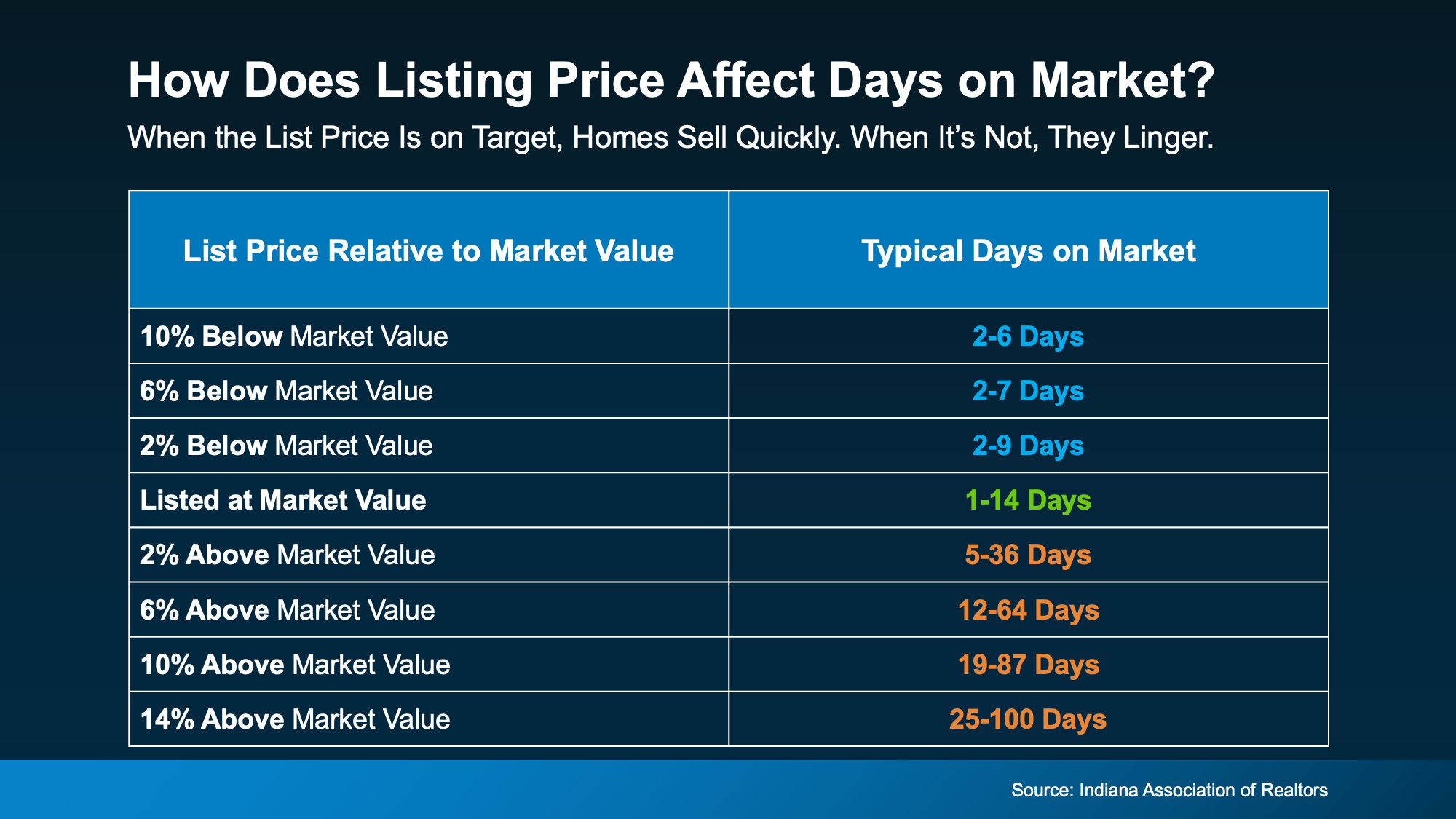
Take a look at this table from the Indiana Association of Realtors. While this data is from one state, the general trend is going to hold true across many markets in the country. It shows that homes listed at or under market value sell fast. But homes priced high? They linger. And that delay comes at a very real cost.

The Price Cut Trap (And How To Avoid It)

When a home sits that long without offers, a lot of sellers will do a price reduction. According to Realtor.com, 16.7% of sellers are going that route today.

But here’s the real problem. Even a price cut doesn’t guarantee a sale.

In fact, some buyers will see a reduction as a sign something’s wrong with the house – even when nothing is.

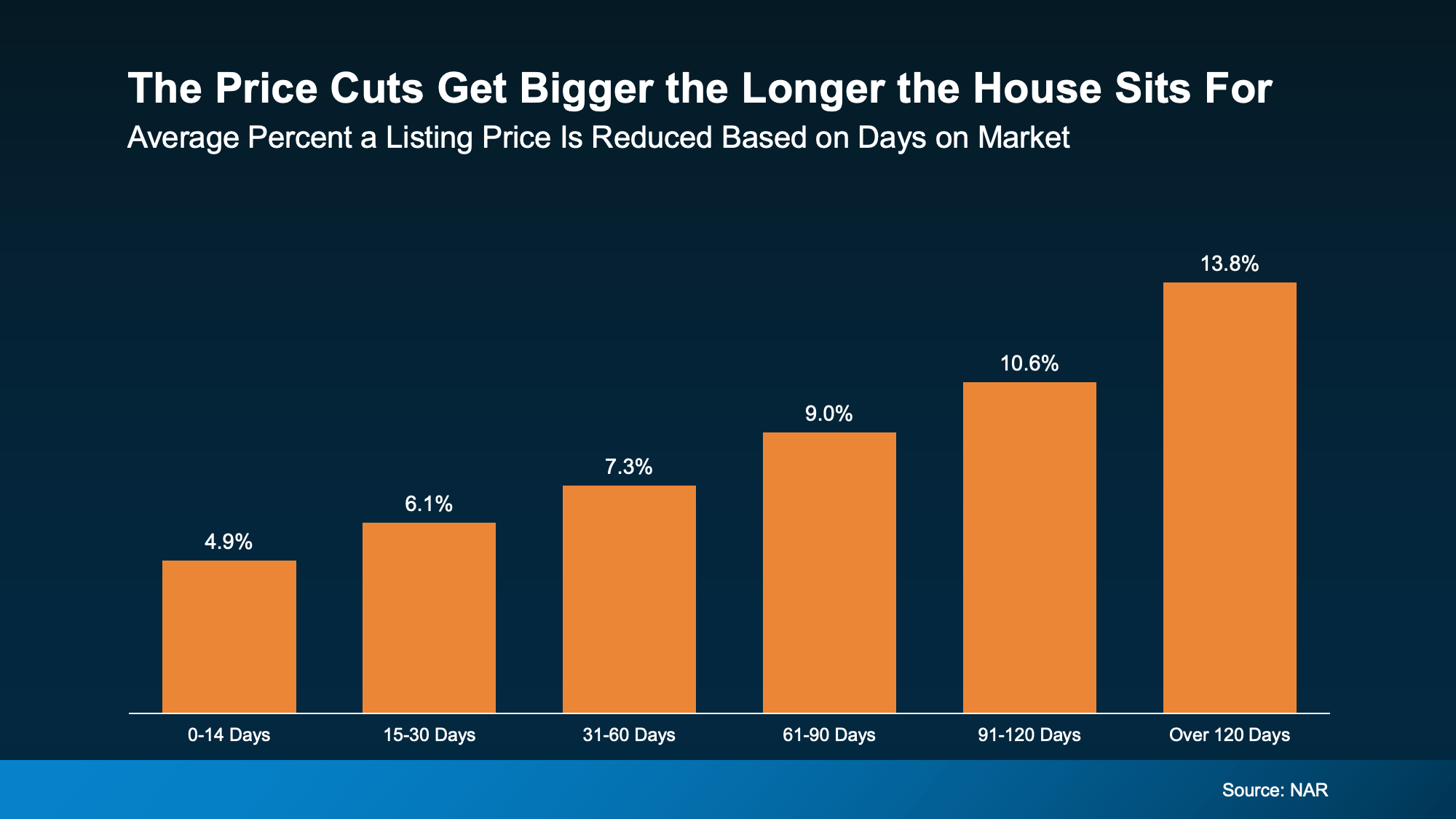
That’s why data from the National Association of Realtors (NAR) shows the longer a home sits, the bigger that price cut tends to be to attract buyers back:

So, what starts as a strategy to “leave room” for negotiate can end up costing you more in the long run.

Why Pricing Right from Day One Matters

Even though listing at or even just shy of market value may sound counter intuitive if you’re looking to get as much money for your house as possible, a lot of the time it really is the best strategy.

Because the goal isn’t just to list your house to see what price sticks. It’s to price it in a way that creates demand from day one.

NAR puts it best:

“While some sellers are pricing their homes higher than ever, a more ‘goldilocks’ frame of mind is a better approach to avoid price cuts and lingering time on the market.”

In other words, there’s a sweet spot. Too high, and buyers disappear. Too low, and they question the value.

But right in the middle? That’s where the magic happens.

And that’s where the right agent comes in.

They help you understand what buyers are actually paying right now, how your home compares, and how to price it so it stands out immediately. And in today’s market, that strategy is the difference between:

  1. Listing high, watching it sit, and selling for less later.

  2. Or, pricing it right, creating competition, and putting yourself in a position to win from the start.

Bottom Line

A lot of homeowners think they can list high now and negotiate later, but that’s a mistake that costs them. And it’s the reason only 4 out of every 10 sellers are getting their asking price or more.

If you want to be in that group, it starts with getting the price right from day one.

Let’s connect so we can make sure you are.

Posted in Selling Your Home
May 15, 2026

A Savvy Foreign Investor's Guide to Investing in Guam Real Estate


Guam Real Estate Investment Guide


A Savvy Foreign Investor’s Guide to

Investing in Guam Real Estate

Opportunity, Ownership, and What Non-U.S. Citizens Need to Know

If you are a non-U.S. citizen exploring real estate investment opportunities in the Asia-Pacific region, Guam deserves a place in that conversation.

Most international investors scanning the Pacific for opportunity focus on the usual markets: Tokyo, Singapore, Sydney, Honolulu. What those markets cannot offer, and what Guam uniquely can, is a combination of full U.S. legal protections for property owners with the geography, culture, and cost profile of the Asia-Pacific region. For a foreign national, that distinction is significant. It means your investment is governed by a transparent, enforceable legal system you can rely on — without the uncertainty that can accompany real estate ownership in some other regional markets.

This guide is written specifically for foreign nationals — non-U.S. citizens — who are considering real estate investment in Guam. It covers the investment landscape, the rules that apply to non-citizen ownership, and the practical steps involved in buying, holding, and eventually selling property here. Where the rules are complex or subject to change — particularly around immigration, taxation, and the treatment of sale proceeds — we will tell you so directly and point you toward the appropriate professionals rather than oversimplify.

The Investment Landscape: What Guam Has to Offer

Foreign investment in Guam real estate is often discussed narrowly in terms of residential property — for personal use or rental income. That’s the most visible entry point for many non-citizen investors, but it’s far from the whole picture. Guam supports a diverse range of investment categories, each shaped by the island’s unique position as a U.S. territory at the crossroads of the Asia-Pacific region.

Hospitality & Tourism-Driven Real Estate.  Guam welcomes visitors annually primarily from Japan, Korea, Taiwan, and across the Asia-Pacific. With major Asian cities just 3.5 to 4 hours away by air, Guam is a natural short-stay destination for regional travelers. For foreign investors, this creates opportunity across hotel and resort properties, tourism-adjacent retail and dining concepts, short-term vacation rentals in high-demand corridors like Tumon, and mixed-use hospitality developments. As Asia-Pacific travel continues its post-pandemic recovery, this segment is actively rebuilding momentum.

Commercial & Retail Real Estate.  Guam functions as a commercial center for the western Pacific, supporting a retail and services market that significantly exceeds what its resident population alone would generate. Visitor spending, military household demand, and Guam’s role as a supply and logistics hub for surrounding island communities all drive activity across retail centers, office properties, warehousing, and mixed-use commercial developments — all categories open to foreign national investors through appropriate ownership structures.

Military-Adjacent Investment.  The U.S. military presence in Guam is large and growing. The ongoing realignment of Marine Corps forces from Okinawa has created sustained demand not just for housing, but for commercial services, logistics infrastructure, and contractor-support facilities. Foreign nationals investing in this space — through correctly structured entities — gain exposure to demand that is driven by U.S. federal policy rather than economic cycles, lending it a durability most markets cannot replicate.

Residential Real Estate.  Guam’s residential market serves two distinct purposes for foreign national buyers. For some, a Guam residence is a personal base — a Pacific home for family use (including for family members pursuing educational opportunities), a place to stay during regular business travel to the region, or a long-term personal investment in a location with U.S.-backed property protections. For others, residential property is an income-generating asset. The rental market draws from three largely independent demand pools — the permanent local population, military personnel and civilian contractors often supported by housing allowances, and visitors seeking alternatives to hotel accommodations — and because these segments operate on different rhythms, the market carries a degree of built-in resilience that single-driver rental markets lack. Whether the goal is personal use, rental income, or both, residential real estate is one of the most accessible entry points into the Guam market for foreign national buyers.

Land & Development.  For foreign investors with a longer time horizon, Guam’s sustained infrastructure investment and ongoing population growth have created opportunities in land acquisition and development — from residential subdivision and commercial buildout to strategic land holding in areas positioned for appreciation as the island continues to grow. Ownership structure matters particularly in this category; a Guam attorney should be engaged early.

One additional consideration shapes every category above: how the investment is held. Non-U.S. citizens may own one residential property for personal occupancy through direct personal ownership; any other purchase type or use — additional properties, rental, commercial, or development — requires a different ownership structure. This is covered in more detail below.

The right opportunity for you depends on your investment profile, timeline, risk tolerance, and capital structure. What matters is engaging professionals who understand the full market — and the specific rules that apply to non-citizen investors — before you commit.

Why Guam’s Legal Framework Matters to Foreign Investors

Guam is an unincorporated U.S. territory, and for a foreign national investor, that status carries real practical weight.

Property ownership in Guam is recorded, protected, and enforced under U.S. federal and territorial law. Title insurance is standard. Escrow is standard. Transactions follow a process that closely mirrors what you would encounter buying property in Hawaii or California. There are no foreign ownership blackout zones, and the full suite of U.S. legal protections for property owners applies in Guam just as it does across the fifty states.

For non-U.S. investors who have navigated the opacity, bureaucratic risk, or political uncertainty that can accompany real estate in other Asia-Pacific jurisdictions, this transparency and enforceability is a meaningful and often underestimated advantage. Your ownership rights in Guam are not subject to the kind of regulatory reversal or foreign-ownership restriction that has affected investors in other regional markets.

What Guam’s Market Actually Looks Like

Guam’s real estate market is smaller and more relationship-driven than the large metro markets most international investors are accustomed to. Inventory across all asset classes is limited. Publicly available market data is less comprehensive than in mainland U.S. cities. And local knowledge — of which properties are performing, which locations carry genuine upside, and which are priced ahead of what the fundamentals can support — is genuinely difficult to ascertain from a distance.

The best opportunities across every asset class move through professional networks as well as through public listings. For a non-citizen investor operating from outside the island, local expertise is not just helpful, it is imperative; it’s the difference between finding the right property and missing it.

There are also property-specific considerations that require on-the-ground knowledge: typhoon-rated construction standards and their implications for replacement cost and insurability; the distinction between fee simple and leasehold title and what each means for long-term value and financing; proximity to military installations and any associated noise, access, or encumbrance considerations; and zoning classifications that determine what a given parcel can actually support. These are among the most significant and consequential factors and details that should be considered, explored at length and addressed BEFORE a contract is signed.

Can a Non-U.S. Citizen Purchase Property in Guam?

Yes — and this is one of Guam’s more straightforward distinctions from other investment destinations. Foreign nationals may purchase real property in Guam without U.S. citizenship, a green card, or permanent residency status. 

The documentation requirements vary depending on your nationality and how you choose to structure the purchase. A qualified Guam real estate agent working alongside a local attorney will walk you through exactly what is required in your specific situation. The process is well-established — Guam has a long-standing international buyer market, and the agents, attorneys, and title companies who work here handle foreign national transactions as a routine part of their practice.

Immigration Status and Length of Stay

This is an area where foreign nationals frequently have questions, and where the stakes of a wrong assumption are high. Purchasing property in Guam does not, by itself, alter your immigration status, extend your permitted length of stay, or create any pathway toward U.S. residency or citizenship. Property ownership and immigration status are entirely separate matters under U.S. law.

The specific rules governing your entry, stay, and any long-term residency options depend on your nationality, visa category, and personal circumstances — and they are subject to change. 

If extended stays, residency, or changes to your immigration status are any part of your long-term plan for Guam, consult a qualified U.S. immigration attorney before you begin your property search.  This is an important course of action that should not be deferred or circumvented.  

How Non-U.S. Citizens Can Structure Ownership

For foreign nationals, how you hold your Guam property is a consequential decision — one that affects what you can own, how it is taxed, and how it can be transferred. Getting the structure right before closing matters; unwinding the wrong structure afterward is both costly and time-consuming.

Personal ownership is available to non-U.S. citizens for a single owner-occupied residential property. If your purpose is personal use — a primary residence, a home for family members, or a long-term personal asset in a U.S.-law jurisdiction — personal ownership is typically the most direct path.

Corporate or entity ownership is generally the appropriate structure for non-citizen investors pursuing commercial real estate, multiple properties, rental portfolios, hospitality assets, or development projects. A properly formed Guam business entity provides structural flexibility, liability protection, and may offer advantages from an estate planning standpoint depending on your home country’s laws and any applicable treaties.

A Guam-licensed attorney should be part of your team from the beginning. The right structure for one investor with hospitality goals looks different from the right structure for another investor acquiring a residential property — and both look different again from a development play. There is no universal answer.

Financing Options for Foreign National Buyers

Foreign nationals do have access to financing in Guam, though the process is more demanding than for domestic borrowers. Local lenders are accustomed to working with non-citizen buyers and investors, but expect to provide comprehensive documentation: income sources, asset statements, credit history, and in many cases, evidence of the lawful origin of your funds. For commercial and investment properties, underwriting criteria differ from residential lending, and matching the right lender to your asset type and financial profile is itself a step that benefits from local guidance.

Securing pre-qualification before beginning your search is strongly recommended regardless of property type. It establishes your credibility with sellers and allows you to act decisively when the right opportunity arises — a meaningful advantage in a market where quality inventory is limited and competitive.

Foreign national cash buyers should be aware that U.S. federal reporting requirements apply to cash transactions above a certain threshold, with obligations extending to all parties in the transaction. Your transaction team — agent, attorney, and title company — will manage the required filings as a standard part of the closing process.

Tax Obligations for Non-Citizen Property Owners

As a non-U.S. citizen owning property in the United States and its territories, including Guam, you will have tax obligations — to the Guam tax authority and potentially to the U.S. federal government - the specifics of which are also contingent on your country of origin, your residency classification under U.S. tax law, the nature and use of the property, any income it generates, and whether applicable tax treaty provisions affect your situation.

For non-citizen investors, this area is particularly important to get right from the start. Tax obligations for foreign nationals differ meaningfully from those of U.S. citizens and residents, and violations of applicable rules carry real financial consequences. For commercial and investment holdings, the picture can be considerably more complex than for a straightforward residential purchase.

Engage a tax professional with experience in U.S. territorial tax law and cross-border investment before you purchase — not after your first income event. Today’s Realty can connect you with trusted professionals who work regularly with non-citizen investors in Guam.

Among the most potentially significant tax implications for non-citizen sellers is FIRPTA — though it is certainly not the only tax consideration foreign property owners should be aware of.

What Foreign Sellers Need to Know About FIRPTA when Selling

Exit planning is as important as entry, and there is one federal law that every non-U.S. citizen property owner in Guam must understand well before placing a property on the market: the Foreign Investment in Real Property Tax Act, known as FIRPTA. This law applies specifically to foreign persons — it does not affect U.S. citizens or residents selling property in the same way.

Under FIRPTA, when a foreign national sells real property located in U.S. territory — including Guam — the buyer is legally required to withhold a portion of the gross sale price at closing and remit it to the requisite taxing authority as a prepayment against any capital gains tax the seller may owe. The governing authority withholds a percentage of the total amount realized, calculated on the sale price — not on any actual gain. Exceptions and reduced rates may exist under specific conditions, and non-citizen sellers who plan ahead — including by applying for a withholding certificate from the taxing authority before listing — may be able to significantly reduce what is held back at closing.

The withheld amount is not a final tax. It is applied against the seller’s actual tax liability when a tax return is filed, and any excess is refundable. But the cash flow impact at closing is real, and foreign sellers who encounter FIRPTA for the first time at the closing table are rarely positioned to manage it well.

FIRPTA planning for non-citizen sellers should begin well before a property is listed — ideally with the same tax advisor engaged during ownership. Today’s Realty can connect you with professionals experienced in guiding foreign nationals through this process.

Life on Guam: Sun, Culture, and the Pacific at Your Doorstep

For investors weighing Guam against other Asia-Pacific markets, the investment fundamentals matter — but so does the place itself. Guam is not simply a convenient jurisdiction. It is a diverse and uniquely positioned island with its own culture, its own rhythms, and a quality of life that is genuinely difficult to replicate elsewhere in the region.

Year-Round Sunshine and a Tropical Climate Built for the Outdoors. Guam sits in the western Pacific tropics, roughly 13 degrees north of the equator, and the climate reflects it. Temperatures hold comfortably in the low-to-mid 80s Fahrenheit year-round. The island sees approximately 300 sunny days annually, with the dry season running from roughly January through June offering particularly clear skies and calm seas. Even during the wetter months, rain typically arrives in short afternoon bursts rather than sustained overcast — and the landscape that follows is lush, green, and unmistakably tropical. For investors or family members who plan to spend meaningful time on the island, this is not a climate to endure. It is a climate to live in.

Beaches and Waters That Define the Pacific. Guam’s coastline is one of its most undeniable assets. Tumon Bay, the island’s primary resort corridor, offers a protected crescent of white sand and calm turquoise water that draws visitors from across Asia. Beyond Tumon, the island’s beaches range from the popular and well-serviced to the genuinely remote — Gun Beach, Ypao Beach, and the pristine northern coastline near Ritidian Point among them. The surrounding waters are exceptional for aquatic activities including diving and snorkeling, with visibility frequently exceeding 100 feet, vibrant coral ecosystems, and dive sites that attract serious recreational divers from around the world. Fishing, paddleboarding, outrigger canoeing, and open-water swimming are part of everyday island life. For a property investor or a family member in residence, access to this kind of natural environment is not incidental — it is part of the value proposition.

CHamoru Culture and the Spirit of the Island. Guam is the ancestral homeland of the CHamoru people — one of the oldest continuous cultures in the Pacific — and that heritage is woven into the character of the island in ways both visible and quiet. The CHamoru language is heard alongside English in daily life. Traditional arts, navigation knowledge, weaving, and carving are actively preserved and passed on. The ancient latte stone pillars — the architectural signature of Guam’s pre-contact civilization — stand as reminders that this island has supported sophisticated human society for over 4,000 years. For investors who value cultural depth alongside financial returns, Guam offers something rare: a place with genuine roots, not simply a constructed resort environment.

Fiestas, Community, and the Practice of Inafa’maolek. Community life on Guam revolves, in no small part, around the village fiesta — a tradition that rotates annually through all 19 villages, each one a celebration of that village’s patron saint. These are not tourist events. They are genuine community gatherings: outdoor cooking, traditional music, family reunions, and open doors to neighbors and strangers alike. The cultural value underlying this tradition has a name in CHamoru: inafa’maolek — roughly, “to make things right or better for one another,” a deeply held ethic of mutual care and interdependence that shapes social life across the island. For foreign nationals who become part of the Guam community — whether seasonally or permanently — this spirit of welcome is not a marketing phrase, it is the norm; the way of life for people who actually live here.

A Food Culture Worth Knowing. Guam’s food scene is a reflection of its layered history and its position at the crossroads of cultures. CHamoru cuisine — built on fresh seafood, coconut milk, red rice, kelagüen (a marinated dish of meat or seafood dressed with lemon and fresh coconut), and wood-fire barbecue — forms the foundation. Layered on top is the influence of Filipino, Korean, Japanese, and American culinary traditions, producing a dining environment that is simultaneously local and internationally familiar. From open-air barbecue stands to resort restaurants serving Japanese, Korean, other Asian specialties, mixed with global fusion, and, of course, American cuisines, to entice and satisfy the palettes of visiting guests and local residents alike, food on Guam is varied, fresh, and deeply social. For families or individuals spending extended time on the island, this is a significant quality-of-life asset.

An English-Speaking, U.S.-Infrastructure Environment. For international investors and their families, the practical dimensions of daily life matter. Guam’s official language is English, and it is the primary language of commerce, government, education, and professional services. U.S.-standard healthcare facilities — including Guam Memorial Hospital, the Guam Regional Medical Center, and several private clinics and specialty practices — serve the island’s population and its visitor base. Schools operating under U.S. curriculum standards serve the local community, and the University of Guam provides accredited higher education on island. Internet and mobile connectivity are consistent with U.S. standards. For foreign nationals accustomed to navigating language barriers and infrastructure gaps elsewhere in the region, Guam’s English-language, U.S.-infrastructure environment is a genuine day-to-day advantage.

Pacific Proximity Without Pacific Isolation. Guam is three and a half to four hours by air from Tokyo, Seoul, Manila, Taipei, and Hong Kong — closer to most of those cities than they are to each other. For an investor who travels frequently within the Asia-Pacific region, a Guam property is genuinely accessible as a base, not a distant second home that requires a transatlantic commitment to reach. Direct flights connect Guam to major regional hubs on a regular basis, and the island’s position in the Chamorro Standard Time zone (UTC+10) keeps it within reasonable working-hours overlap of both Asian and Australian business markets.

Taken together, these qualities — the climate, the natural environment, the cultural depth, the community character, and the practical infrastructure of a U.S. territory — describe a place that rewards investment not just on paper, but in lived experience. For buyers considering whether Guam fits their life as well as their portfolio, the answer, more often than not, is yes.

Ready to Explore What Guam Has to Offer?

Today’s Realty has been serving buyers, sellers, and investors across Guam for years. We work with clients from across the globe — including non-U.S. citizens navigating the specific rules that apply to foreign national ownership — and across the full spectrum of property types and investment objectives.

Whether you are drawn by the tourism and hospitality market, Guam’s growing military and commercial demand base, the appeal of residential real estate — whether for personal use or rental income, the potential of land and development, or simply the security of U.S.-backed ownership in one of the most strategically positioned locations in the Pacific — we are here to help you evaluate the opportunity with clear eyes.

We will give you an honest, up-to-date assessment of the market, help you identify opportunities suited to your investment goals, and connect you with the legal, tax, and financial professionals you need to move forward with confidence as a foreign national investor.

Contact Today’s Realty — and let’s start the conversation.

This article is intended for general informational purposes only and does not constitute legal, tax, immigration, or financial advice. Laws and regulations governing foreign national property ownership, taxation, FIRPTA withholding, and immigration status are subject to change without notice. Every investor’s situation is different. Readers are strongly encouraged to consult qualified legal, tax, and immigration professionals familiar with their specific circumstances before making any real estate investment decisions.

© 2026 Today’s Realty  Information deemed reliable but not guaranteed. 


April 21, 2026

5 Questions To Ask Before Buying a Home in the Next 12 Months

If you’re trying to decide if you’re ready to become a homeowner in the next twelve months, there’s probably a lot on your mind. You’re thinking about your finances, today’s mortgage rates, home prices, the current state of the economy, and more. And, you’re juggling how all of those things will impact the choice you’ll make. It’s a lot.

But here’s what you need to remember. While housing market conditions are definitely a factor in your decision, your own personal situation and your finances matter too. As an article from NerdWallet says:

“Housing market trends give important context. But whether this is a good time to buy a house also depends on your financial situation, life goals and readiness to become a homeowner.”

So, instead of trying to time the market, focus on what you can control. Here are a few questions that can give you clarity on whether or not you’re ready to make your move.

1. Do you have a stable job?

Buying a home is a big commitment. You’re going to take out a home loan stating you’ll pay that loan back. Knowing you have a reliable job and a steady stream of income is important and will give you peace of mind for a purchase so large. 

2. Have you figured out what you can afford?

If you have a reliable paycheck coming in, the next thing to figure out is what you can afford. This depends on your budget, spending habits, debts, and more.

At this point, it helps to talk with a trusted lender. They’ll be able to tell you about the pre-approval process and what you’re qualified to borrow, current mortgage rates and your approximate monthly payment, closing costs, and other expenses you’ll want to budget for. That way, you have a good idea of what to expect. 

3. Do you have an emergency fund?

As you crunch your numbers, you'll want to make sure you have enough cash left over in case of emergency. Think about it. You don’t want to overextend on the house, and then not be able to weather a storm if one comes along. It’s not a fun topic, but it’s an important one. As CNET says:

“You’ll want to have a financial cushion that can cover several months of living expenses, including mortgage payments, in case of unforeseen circumstances, such as job loss or medical emergencies.”

4. How long do you plan to live there?

It was mentioned above, but buying a home comes with some upfront expenses. And while you’ll get that money back (and more) as you gain equity, that process takes some time. If you plan to move again soon, you may not recoup your full investment.

So, how long should you stay put in an ideal world? Lawrence Yun, Chief Economist at the National Association of Realtors (NAR), explains:

“Five years is a good, comfortable mark. If the price of your home appreciates considerably, then even three years would be fine.”

So, think about your future. If you’re going to live there for a while, it may make sense to go for it. But, if you’re looking to sell and move within a year or two because you’re planning to transfer to a new city with that promotion you’ve been working so hard for, or you anticipate you'll need to move to take care of family, those are things to factor in. 

5. Do you have a team of real estate professionals in place?

If you do, great. But if you don’t, finding a trusted local agent and a lender is a good first step. Having the right team can make figuring out everything else easier. The pros can talk you through your options and help you decide if you’re ready to make your move, or if you have a few more things to get in order first.

Bottom Line

If you want to have a conversation about the most important things you need to consider when buying a home, contact one of our agents. 


April 3, 2026

Why Getting Pre-Approved Before House Hunting Matters

Be honest. Have you started looking at homes online yet? If you have, it’s already time to get pre-approved. Because here’s what not enough people know.

If buying a home is on your radar – even if it’s more of a someday plan than a right now plan – you don’t want to wait until later on in the process to tackle this step.

No matter what you’ve heard, pre-approval isn’t about commitment. It’s about clarity.

And here are the two big ways pre-approval sets you up for success. 

You Know Your Numbers Up Front 

During the pre-approval process, a lender will walk through your finances and tell you what you can borrow based on your income, debts, credit score, and more. And once you have that number, your search becomes a lot more focused.

With a mortgage pre-approval, you know what you can borrow, so it’s easier to figure out your ideal price point, and what you can actually afford. And that clarity is key.

Because if you just start browsing online and just guess at your price point, you run the risk of falling for a house that’s outside of your price range – or missing out on ones that aren’t.

You want this number to be clearly defined before your search. Here’s why.

You Can Move Quickly When You Find the One

This is how a lot of home searches go today. You scroll through listings just to see what’s out there, and then it happens. You fall in love with something you’ve seen online.

If you’re already pre-approved? You’re probably in great shape.

But if you’re not…

Instead of being able to jump on that house and quickly make an offer, you have to scramble to get a lender, gather the financial documents, and then submit the necessary pre-approval paperwork first. And while you’re waiting to hear back from your lender, someone else who’s more prepared could beat you to the house. As Bankrate explains:

“The best time to get a mortgage preapproval is before you start looking for a home. If you find a home you love but don’t have a preapproval in hand, you likely won’t have time to get preapproved before you need to make an offer . . .”

And that’s avoidable, with the right prep.

Because while you can’t control when the right home shows up, you can be ready for it. Think of it like showing up to the starting line with your shoes tied and your warm-up done – while everyone else is still looking for parking.

It’s not about rushing your timeline. It’s about removing the delay between finding the right home and being able to move on it.

One Thing You Need To Know About Pre-Approvals

Speaking of timing, pre-approvals do have an expiration date. So, be sure to ask your lender how long it’s good for. The Mortgage Reports explains:

Mortgage preapproval letters are typically valid for anywhere from 30 to 90 days. However, a preapproval can be updated and extended if the lender re-checks your information.”

Doing the right prep and knowing this information can make the whole process a lot smoother.

You don’t have to be ready to buy to be ready to buy.

Getting pre-approved doesn’t mean you’re committing to buy right now. It just means you’ve taken a step to understand your numbers. And when a home catches your attention, you’re prepped and good to go.

Bottom Line

Ask yourself this: if your perfect home popped up tomorrow, would you be ready to make a move?

If the answer is no and you want to buy, it may be time to get pre-approved. You don’t feel behind before your search even officially kicks off.


March 3, 2026

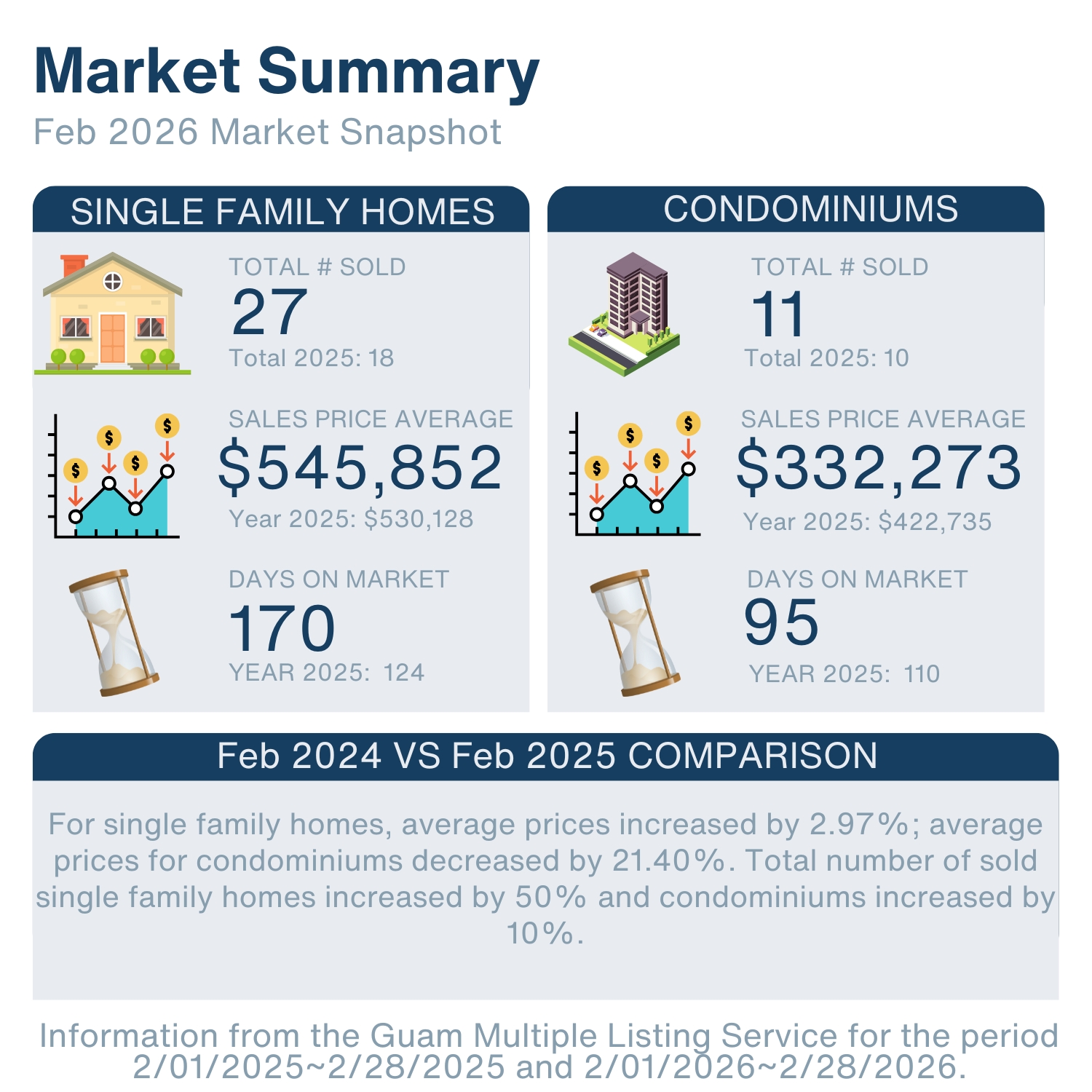
Guam February Market Report: Real Estate Trends, Prices, and Market Insights

As February comes to a close, taking a closer look at the Guam real estate market can help buyers, sellers, and investors make more informed decisions. Our February Market Report provides a snapshot of current trends, pricing activity, and overall movement in the local housing market. Whether you are thinking about purchasing your first home, selling your current property, or simply keeping an eye on market conditions, staying updated is one of the best ways to plan your next move.

Market reports offer valuable insight into how the real estate landscape is shifting from month to month. They can highlight changes in home prices, inventory levels, buyer demand, and the amount of time properties are spending on the market. These trends can make a big difference when it comes to pricing a home correctly, knowing when to buy, or understanding what opportunities may be available.

In Guam, real estate conditions can vary depending on location, property type, and current demand. That is why reviewing the latest market data is so important. A well-informed approach can help both buyers and sellers feel more confident as they navigate the process. With the right information, you can better understand where the market stands and how it may affect your goals.

Our February Market Report is designed to give you a clearer picture of what is happening in Guam real estate right now. If you would like to learn more about what these trends mean for you, further information can be inquired from one of our real estate agents. Our team is here to answer your questions, provide local market insight, and help guide you toward the best decision for your real estate needs.


Feb. 23, 2026

Why Staying Updated With Your HOA Meetings Matters

Why Attending HOA Meetings Matters for Homeowners

Owning a home in a community with a Homeowners Association (HOA) comes with both benefits and responsibilities. While it’s easy to think of HOA meetings as optional, staying connected with your board is one of the smartest things you can do as a homeowner.

These meetings aren’t just formalities — they’re your direct line to what’s happening in your neighborhood.

Stay Informed About Your Investment

Your home is one of your biggest investments. HOA meetings provide updates on budgets, maintenance plans, upcoming projects, and long-term improvements that directly affect property values. Whether it’s roof replacements, landscaping changes, or reserve funding, these discussions shape the future of your community.

By attending meetings or reviewing the minutes, you gain insight into where association funds are going and what improvements are planned — helping you avoid surprises down the road.

Understand Rule Changes and Community Updates

HOAs periodically update rules, policies, and procedures. Missing meetings can mean missing important changes related to parking, exterior modifications, rental policies, or community standards.

Staying current helps ensure you remain compliant while also giving you the opportunity to voice concerns before decisions are finalized.

Have a Voice in Decisions

HOA meetings are one of the few chances homeowners have to influence how their community is managed. Whether it’s vendor selections, amenity upgrades, or neighborhood priorities, your input matters.

Showing up allows you to ask questions, provide feedback, and advocate for improvements that benefit everyone.

Catch Issues Early

Small concerns can turn into expensive problems if they go unnoticed. HOA meetings often surface maintenance issues, insurance updates, or infrastructure needs early — giving homeowners time to prepare financially and emotionally.

Being informed means fewer unexpected assessments and better planning.

Build Stronger Community Connections

Beyond business, HOA meetings help build relationships with neighbors and board members. Strong communication creates healthier communities, encourages transparency, and fosters collaboration.

When homeowners stay engaged, communities tend to operate more smoothly.


Final Thoughts

You don’t have to attend every meeting in person, but staying informed — whether through meetings, emails, or meeting minutes — is essential. It helps protect your investment, keeps you aligned with community goals, and ensures your voice is heard.

A few minutes of attention each month can save you time, money, and stress in the long run.

Your home deserves that level of care.


Feb. 23, 2026

Home Ownership vs. Renting: Finding the Right Fit for Your Lifestyle

Home Ownership vs. Renting: Which Is Right for You?

Choosing between buying a home and renting isn’t just a financial decision—it’s a lifestyle one. Both options come with real benefits, and the “right” choice depends on where you are in life, your goals, and what kind of flexibility or stability you’re looking for.

Let’s break it down in simple terms.


The Case for Home Ownership

Buying a home is often about putting down roots and building long-term value.

Some of the biggest advantages include:

  • Building equity over time. Each payment helps grow something you own.

  • Stability. No surprise rent increases or lease renewals.

  • Freedom to personalize. Paint, renovate, landscape—make it yours.

  • Long-term investment potential. Real estate has historically been a strong wealth-building tool.

Home ownership is a great fit if you’re planning to stay in one place for a while, want predictable housing costs, and like the idea of investing in your future.

Of course, ownership also comes with responsibilities—maintenance, repairs, and upfront costs—so it’s important to be realistic about what fits your budget and lifestyle.


The Case for Renting

Renting offers flexibility and simplicity, which can be incredibly valuable depending on your situation.

Common benefits include:

  • Lower upfront costs.

  • Minimal maintenance. Most repairs are handled for you.

  • Flexibility to move. Ideal if your job or plans may change.

  • Predictable short-term expenses.

Renting can make sense if you’re relocating, saving for a down payment, or just not ready to commit to one location yet.

But unlike ownership, rent payments don’t build equity—and increases over time can make long-term costs harder to predict.


There’s No “One-Size-Fits-All” Answer

The truth is, neither option is universally better.

The best choice depends on:

  • Your financial readiness

  • How long you plan to stay in the area

  • Career stability

  • Family goals

  • Lifestyle preferences

That’s where professional guidance makes all the difference.


Why Working With an Experienced Agent Matters

Whether you’re considering buying your first home, upgrading, downsizing, or even deciding if now is the right time to purchase at all—having a knowledgeable agent in your corner changes everything.

At Today's Realty, our agents bring years of hands-on market experience to every conversation. They don’t just show properties—they listen to your goals, explain your options clearly, and help you evaluate what truly makes sense for you.

Our team understands local neighborhoods, pricing trends, and financing realities. More importantly, they take the time to walk you through each step, answer every question (yes—all of them are valid), and help you compare renting versus owning based on your personal situation—not pressure or sales tactics.

Think of your agent as your advocate, advisor, and guide.


Let’s Find the Best Option for You

If you’re unsure whether buying or renting is right for you right now, that’s perfectly okay. You don’t have to figure it out alone.

A quick conversation with one of our experienced agents can help clarify your options, outline next steps, and create a plan that fits your lifestyle and long-term goals.

Whether you’re ready to move forward or just gathering information, Today’s Realty is here to help you make confident, informed decisions—at your pace.

Because finding the right place isn’t just about property…
it’s about finding what feels like home.


Feb. 17, 2026

Why Your Relationship With Your Realtor Matters: Finding a Home That Fits Your Lifestyle

Why Your Relationship With Your Realtor Matters More Than You Think

Buying or selling a home is one of the biggest financial and emotional decisions you will ever make. It is not just a transaction — it is a life moment. Whether you are purchasing your very first condo, upgrading to a larger family home, or preparing to sell a property filled with memories, the relationship you build with your Realtor can shape the entire experience.

At Today's Realty, we believe that real estate is personal. Your goals, concerns, dreams, and lifestyle all matter — and every single question you have is valid.

Let’s talk about why that relationship is so important.

Real Estate Is About People, Not Just Properties

Homes are not just walls and roofs. They are where birthdays are celebrated, mornings begin, and futures are built. Because of that, choosing the right Realtor is about more than finding someone who can unlock doors or write contracts.

It is about trust.

A strong Realtor-client relationship creates a space where you feel comfortable asking questions, sharing concerns, and being honest about what you really want. Maybe you care about school districts. Maybe you want a quiet neighborhood. Maybe you dream of ocean views, mountain breezes, or a backyard for your pets.

Whatever your priorities are, they matter.

Your Realtor should take the time to understand:

  • Your lifestyle and daily routines

  • Your budget and long-term plans

  • Your must-haves and your deal-breakers

  • Your timeline and comfort level

When this foundation is built, everything else flows more smoothly.

Every Question You Ask Is Valid

Many buyers and sellers hesitate to speak up because they worry they are asking “too many questions” or being “difficult.”

Let us be clear: there is no such thing.

This is your investment. Your future. Your peace of mind.

Ask about:

  • Pricing trends

  • Neighborhoods

  • HOA fees

  • Property condition

  • Financing options

  • Inspection results

  • Market competition

  • Closing timelines

A good Realtor welcomes these conversations. They know that informed clients make confident decisions. Your questions help your agent guide you toward the best possible outcome — not just the fastest one.

At Today’s Realty, we encourage open communication because transparency builds confidence.

You Are Allowed to Be Picky With Your Home

Your home should support the lifestyle you want to live.

That means you are absolutely allowed to be selective.

Maybe you want natural light in every room.
Maybe you need space for a home office.
Maybe walk ability matters more than square footage.
Maybe you want something move-in ready — or maybe you love renovation projects.

Being picky does not make you difficult. It makes you intentional.

Your Realtor’s role is not to rush you into something that does not fit. It is to help you explore options, compare properties, and evaluate each opportunity honestly. Sometimes that means viewing multiple homes. Sometimes it means waiting for the right listing. Sometimes it means walking away.

And that is okay.

A strong Realtor relationship respects your standards and supports your vision.

Finding the Best Fit for Your Lifestyle

Every client is different. Some buyers prioritize proximity to work. Others want room to grow their family. Some sellers want maximum exposure and fast results. Others value privacy and strategic pricing.

There is no one-size-fits-all approach in real estate.

That is why your Realtor should focus on understanding how you live — not just what you can afford.

Do you love entertaining?
Do you prefer quiet evenings at home?
Are you looking for investment potential or long-term stability?
Is outdoor space important?

When your Realtor truly listens, they can recommend properties and strategies that align with your real life, not just market statistics.

At Today’s Realty, our goal is always to match you with options that support your lifestyle today and your goals for tomorrow.

Guidance Through Every Step

Real estate comes with a lot of moving parts. Contracts, inspections, negotiations, appraisals, disclosures — it can feel overwhelming.

This is where your Realtor becomes your advocate and guide.

A strong Realtor relationship means:

  • Explaining each step in plain language

  • Helping you understand documents before you sign

  • Negotiating on your behalf

  • Coordinating inspections and timelines

  • Keeping you informed along the way

  • Protecting your interests from start to finish

You should never feel alone in the process.

Your Realtor is there to answer questions, solve problems, and keep everything moving forward while minimizing stress.

More Than a Transaction — A Partnership

The best Realtor relationships feel like partnerships.

They are built on:

  • Communication

  • Honesty

  • Respect

  • Professional expertise

  • Shared goals

When you work with a Realtor who genuinely cares about your outcome, you feel supported — not pressured. You feel heard — not rushed. And you feel confident knowing someone is advocating for what is best for you.

That partnership does not end at closing. Many of our clients continue to reach out years later for advice, referrals, or future plans. That ongoing connection is something we truly value.

Our Commitment to You

At Today’s Realty, we believe that real estate should be empowering, not intimidating.

We are here to:

  • Listen to your needs

  • Answer every question

  • Explore all available options

  • Respect your preferences

  • Help you find a home that fits your lifestyle

  • Support you through every stage of the journey

Whether you are buying, selling, or just starting to explore possibilities, we are ready to walk alongside you.

Because at the end of the day, this is not just about finding a property — it is about helping you find the place where your next chapter begins.

Ready to start your journey?

Let’s talk. Your goals matter, your questions matter, and your future home deserves thoughtful care every step of the way.


Feb. 11, 2026

Love Where You Live: Fun & Easy Valentine’s Day Ideas for the Whole Family

❤️ Love Where You Live: A Valentine’s Day Celebration at Home

Valentine’s Day isn’t just about roses and chocolates — it’s about connection, comfort, and creating memories in the place you call home. Whether you’re celebrating with a partner, family, friends, or simply treating yourself, your home can be the perfect backdrop for a fun and meaningful day.

Here are a few easy, all-ages ideas to help you turn Valentine’s Day into something special — no stress required.


🏡 Turn Your Home into a Valentine’s Day Haven

Start with simple touches that instantly set the mood:

  • Add throw pillows or blankets in reds and pinks

  • Light a few candles or string soft fairy lights

  • Put on your favorite feel-good playlist

  • Open the windows and let natural light brighten the space

You don’t need to redecorate your entire home — even small changes can make a big difference.


✂️ Easy Crafts Anyone Can Enjoy

Crafting is a great way to slow down and connect, especially with kids or loved ones. If you’re looking for simple, beginner-friendly ideas, these sites are packed with inspiration:

  • Crayola – Free printable cards, coloring pages, and kid-approved crafts

  • Michaels – Step-by-step DIY projects and seasonal craft ideas

  • Hobby Lobby – Easy décor projects and handmade gift inspiration

  • Pinterest – Endless Valentine’s boards for cards, treats, and home décor

Try something simple like:

  • Handmade Valentine cards

  • Paper heart garlands

  • Decorated mason jars for candy or flowers

  • A “love wall” where everyone writes kind notes to each other

Crafting doesn’t have to be perfect — it just has to be fun.


🍓 Make It a Treat Day

Food is always part of the celebration! Keep it light and playful:

  • Heart-shaped pancakes or sandwiches

  • Chocolate-dipped strawberries

  • A family pizza night with heart-shaped crusts

  • A cozy dessert bar with cookies, sprinkles, and frosting

Invite everyone to help — cooking together often becomes the best memory of the day.


💕 Create Moments That Matter

Valentine’s Day is really about togetherness. Here are a few meaningful ways to spend the evening:

  • Movie night with blankets and popcorn

  • Board games or card games around the table

  • A gratitude circle where everyone shares something they appreciate

  • A short walk around the neighborhood to enjoy the fresh air

These small moments help turn a house into a home.


🌷 Love Starts at Home

Your home is more than just walls and a roof — it’s where laughter lives, memories grow, and relationships deepen. Valentine’s Day is a perfect reminder to appreciate the space that supports your everyday life.

Whether you’re crafting with kids, sharing dessert with loved ones, or simply enjoying a quiet evening, take time to celebrate where you live and who you share it with.

From all of us, we wish you a warm, joyful Valentine’s Day filled with creativity, connection, and comfort. ❤️